

We all get 24 hours in a day, but only a handful of them feel like they’re truly ours. After seven hours of sleep and a full workday, most adults end up with just 7 to 9 hours left for everything else, including meals, chores, hobbies, family time, or simply catching our breath.
Now here’s where things get interesting: the average American spends nearly five of those remaining hours on their phone.
Screens are a normal part of modern life, and for most of us, they’re essential. But stepping back and realizing how much of our time we spend on devices can be a helpful wake-up call. The good news is you don’t need to quit screens entirely to feel better. With a few simple tools and by building better habits, you can create a healthier balance with your devices. What better time to get started than the New Year?
Building Healthy Digital Habits
By the psychological definition, a habit is an “automatic behavior acquired through repetition, often occurring without conscious thought.” Luckily, forming new and healthier habits can be easy. Research shows many habits take around 66 days to become “automatic,” though it varies by person and the practice you’re trying to take on.
The best way to form a habit is to start with small, realistic changes. Rather than dropping your overall screen time by hours, start with 15-30 minutes. If you work at a computer, schedule regular breaks from the screen by doing more manual work like making copies, taking handwritten notes, or even taking short walks away from your desk entirely.
Speaking of scheduling, you’ll be more successful if you remind yourself to do the task. That may look like setting alarms on your phone to take screen breaks or leaving sticky notes where you’ll see them, like where you instinctively pick up your phone.
Accountability is key to breaking old habits and starting new ones. Check in with yourself weekly using a screen time report (available on both Apple and Android), or, better yet, share it with a loved one who will help hold you accountable to your goals.
Reward yourself for consistency. Did you cut your screen time by 20 minutes every day for a whole week? Enjoy a piece of your favorite candy. Were you successful at reaching for a book instead of your phone before bed? Take yourself out for a coffee on the way to work. When you celebrate your wins, you’ll feel pride in yourself and continue to strive for that success.
Practical Tips to Reduce Screen Overload
Even with the best intentions, bad habits can be hard to break, especially when it comes to screen time, which triggers our brains to release dopamine. There are some excellent online and real-world tools to help you stop reaching for your phone.
1. Set Screen Time Limits
These days, most phones and tablets have built-in digital wellness tools to help you set and monitor your screen time (iOS Screen Time or Android Digital Wellbeing).
On computers, you can use browser extensions or “site blockers” to limit time on social media, entertainment, or news sites that naturally suck us in for “doomscrolling.”
If you like a little fun, you can gamify your experience. Focus Friend is a “gamified focus timer” that asks you to help your friend, an animated bean, knit socks and scarves. The only way the little bean can knit scarves is if you give it time, i.e., don’t interrupt it by clicking into apps. You can trade the knitted products for upgrades to the bean’s house. You’re still able to call and text, but it locks down the distracting apps like social media platforms and rewards you for the time away.
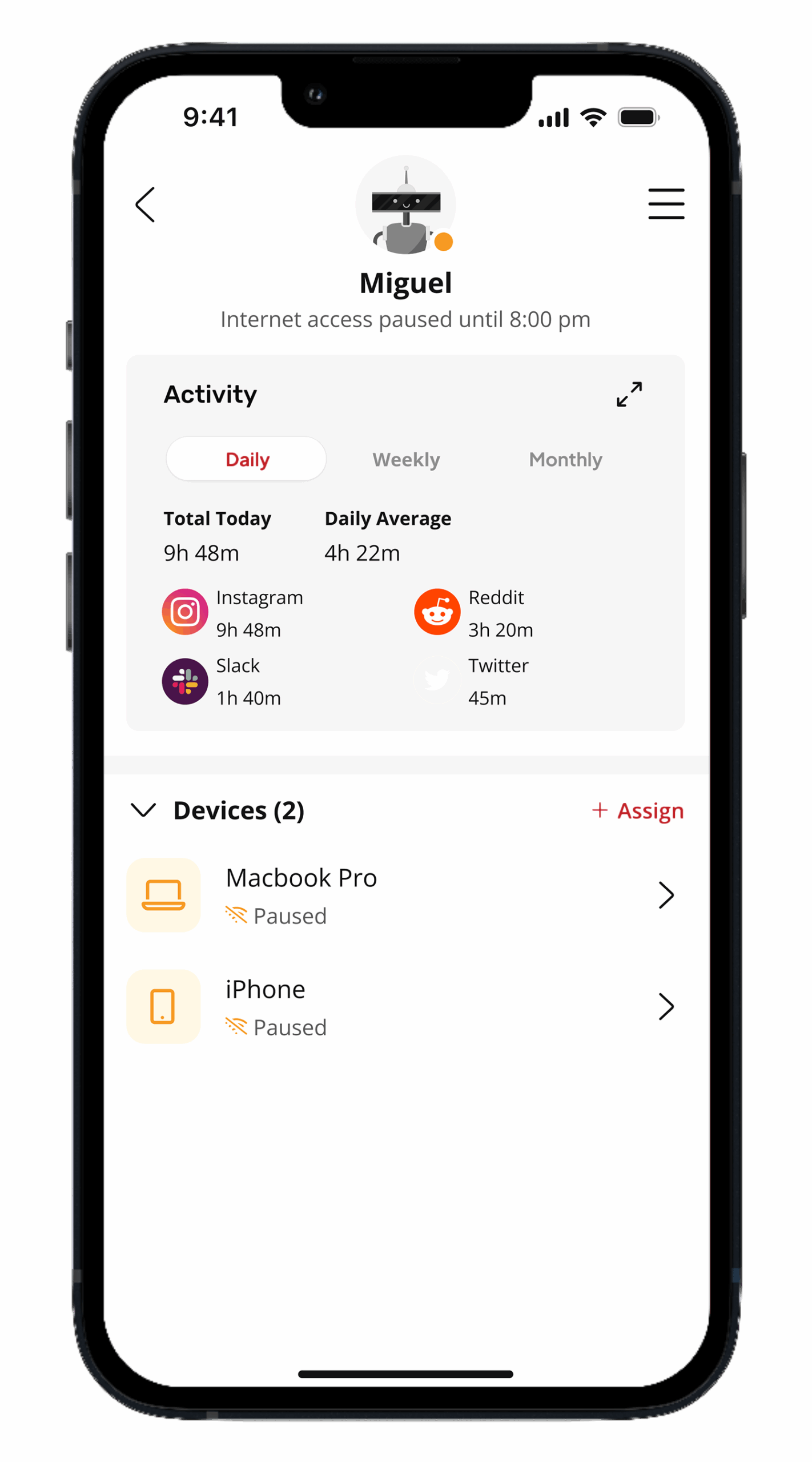
For households with multiple devices or with kids, Red River Communications’ Managed Wi-Fi lets you set device‑specific limits or scheduled “offline” times, helping you enforce screen‑time rules at the network level (meaning sneaky teenagers can’t find workaround apps to bypass on-device parental controls).
It’s all about balance and moderation. Again, small, consistent limits tend to stick better and are far more practical than a cold-turkey cutoff from technology.

2. Physical and Environmental Adjustments
For a more physical, hands-on (or dare we say, “hands-off”) approach, create “phone‑free zones” in your home. Places like the dinner table or bedrooms, and times like family movie nights, can be “phone-free.” Use a dedicated drawer or basket to collect phones and smartwatches, freeing you physically from the devices while you’re in those zones.
Still find yourself bypassing the screentime locks and alerts? Consider a physical tool that makes it inconvenient to unlock your phone.
Brick‑Your‑Phone is a small, physical block that prevents you from using your phone for a set period of time. To unlock your phone, you either have to wait out the lock period or physically tap your phone against the block again. “Brick” your phone before heading out for a walk or heading up to bed, making it physically inconvenient to unbrick it.
3. Replace Doom‑Scrolling
One of the best ways to break an unhealthy habit is to replace that urge with a healthier one.
Mimic the dopamine hit from screens with brain games and activities like puzzles, word searches, or Sudoku. Or give yourself a different kind of brain chemical hit by exercising or doing outdoor work like gardening.
If you’re looking for a form of escapism, books and podcasts are both great alternatives.

Red River Communications Supports Healthier Digital Habits
Good internet can make remote work or streaming easy, but it doesn’t have to dominate your free time. Red River Communications wants your fiber internet service to be a tool that helps, not a trap for your attention or the spare hours in your day.
You don’t have to cut your screen time from 5 hours to 2 hours overnight. Cutting back by 15 minutes a day, or adding one screen‑free period, can add up and set you on a path to bigger and healthier changes in your online habits and the rest of your life.
Red River Communications is your partner in all things tech and internet. Contact our Customer Service team for more information about how we can help you find balance online and off via our Managed Wi-Fi service.